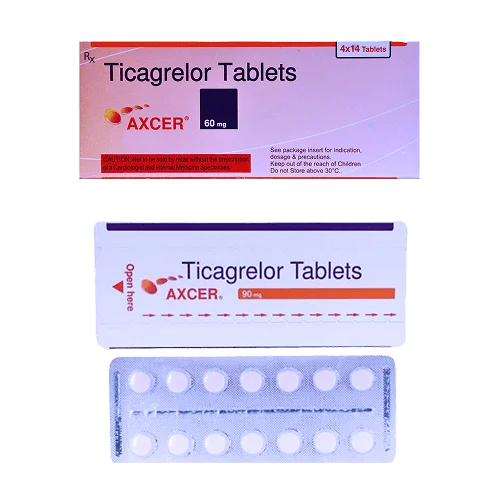
Axcer medication is generally prescribed for adult patients with coronary artery disease, particularly those who have undergone percutaneous coronary intervention (PCI) procedures. Axcer helps maintain proper blood circulation and lowers the risk of recurrent cardiovascular events.
Axcer works under specific physiological conditions, meaning it prevents clot formation in blood vessels but does not dissolve existing clots. It is typically used in combination with other medications such as aspirin as part of long-term cardiovascular treatment.
Benefits of Axcer:
- Prevents blood clot formation: Helps reduce platelet aggregation in blood vessels.
- Improves cardiovascular protection: Often prescribed after heart procedures such as angioplasty.
- Onset time: Begins affecting platelet activity within 30 minutes to 1 hour after administration.
- Duration of action: Antiplatelet effects may last 24 hours or longer due to irreversible platelet inhibition.
- Cost advantage: Generic prasugrel formulations may be more affordable than some branded antiplatelet drugs.
- Clinical advantage: Frequently used in combination with low-dose aspirin for enhanced cardiovascular protection.
Working of Axcer:
Axcer works by preventing platelets from forming blood clots inside arteries.
Step-by-step mechanism:
- The active ingredient prasugrel is converted in the liver into its active metabolite.
- The active compound binds to P2Y12 receptors on platelet surfaces.
- Blocking these receptors prevents adenosine diphosphate (ADP) from activating platelets.
- As platelet activation is inhibited, platelet aggregation decreases.
- Reduced platelet clumping prevents the formation of harmful arterial blood clots.
Through this mechanism, Axcer helps maintain proper blood flow in arteries and lowers the risk of cardiovascular complications.
Side Effects of Axcer:
These side effects are usually mild and temporary:
Common Side Effects
- Nosebleeds
- Mild bleeding or bruising
- Gastrointestinal discomfort
- Dizziness
- Headache
Serious Side Effects
- Unusual or prolonged bleeding
- Blood in urine or stool
- Severe headache or confusion
- Vomiting blood or coughing up blood
- Signs of internal bleeding
Warnings for Axcer:
Axcer may interact with anticoagulants, NSAIDs, aspirin, and certain antidepressants, which can increase the risk of bleeding.
The medication should not be used in individuals with active bleeding disorders, a history of stroke or transient ischemic attack (TIA), or severe liver disease.
The safety of prasugrel during pregnancy or breastfeeding is not fully established. Consultation with a healthcare professional is recommended before use.
Patients with recent surgery, gastrointestinal ulcers, or bleeding disorders should use Axcer only under strict medical supervision.