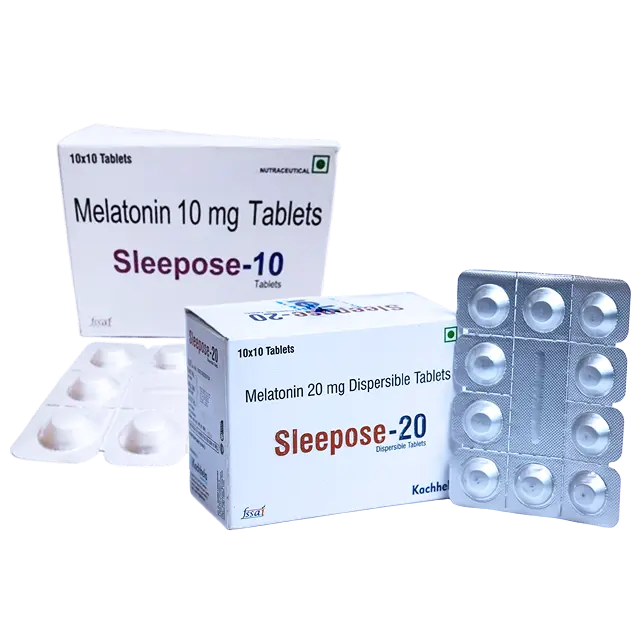
Sleepose medication works by interacting with receptors in the brain that control relaxation and sleep cycles. By enhancing inhibitory signals in the nervous system, Sleepose helps the brain transition more easily from wakefulness to sleep.
Sleepose Tablet is intended for use only when a person is ready to sleep and can dedicate a full night (7 to 8 hours) to rest. It does not create sleep automatically during daytime activity and should always be taken exactly as prescribed by a healthcare professional.
Benefits
Quality sleep is essential for physical health, emotional stability, and cognitive performance. Persistent insomnia may lead to fatigue, irritability, impaired memory, and reduced productivity.
Sleepose Tablet may support better sleep patterns and daily functioning by promoting restful nighttime sleep.
Potential benefits include the following:
- Improved ability to fall asleep more quickly
- Fewer nighttime awakenings
- Longer and more restful sleep duration
- Improved daytime alertness and focus
- Reduced fatigue associated with sleep deprivation
The effectiveness of treatment may vary depending on the individual’s health condition and sleep habits.
Benefits of Sleepose
- Contains zolpidem, a widely prescribed medication for insomnia
- Helps support sleep initiation and maintenance
- Onset time: usually begins working within 15 to 30 minutes
- Duration of action: typically supports sleep for about 6 to 8 hours
- Available in two dosage strengths (10 mg and 20 mg) for flexible treatment options
- May improve overall sleep efficiency and nighttime restfulness
- Generic formulations may be more cost-effective than some branded sleep aids
Sleepose Tablet helps manage insomnia symptoms but should be used under medical supervision.
Working / Mechanism of Action
Sleepose 10 mg, 20 mg works by influencing neurotransmitter activity in the brain that regulates sleep and wakefulness.
Step-by-step explanation:
- The active ingredient zolpidem binds selectively to GABA-A receptor complexes in the brain.
- GABA (gamma-aminobutyric acid) is the main inhibitory neurotransmitter responsible for calming neural activity.
- By enhancing the action of GABA, zolpidem reduces excessive brain signaling associated with wakefulness.
- This calming effect helps induce relaxation and sleepiness.
- As neuronal activity slows, the brain transitions more easily into sleep.
- The medication also helps maintain sleep stability during the night.
Unlike older benzodiazepines, zolpidem targets sleep-related receptors more selectively, which may reduce certain side effects when used appropriately.
Dosage
Standard Dose
- 10 mg or 20 mg tablet, taken orally as prescribed by a healthcare professional.
Frequency
- Usually taken once daily before bedtime.
Timing
- Recommended 15 to 30 minutes before going to sleep.
Administration Method
- Swallow the whole tablet with water.
- Avoid crushing or chewing unless directed by a healthcare professional.
- It should be taken when the patient can devote a full night to sleep (usually 7-8 hours).
Special Population Considerations
- Men over 65 years should consult a healthcare provider before use
- Patients with liver, kidney, or heart disease require careful evaluation
- Patients with respiratory disorders: require medical evaluation before use.
Always follow the dosage instructions provided by your healthcare provider.
Precautions
Before taking Sleepose Tablet, inform your healthcare provider if you have:
- Allergy to tadalafil or related medications
- Heart disease or chest pain (angina)
- Irregular heartbeat
- Low blood pressure
- History of stroke or heart attack
- Liver or kidney disease
Lifestyle Considerations
- Limit alcohol consumption, as it may increase dizziness or reduce effectiveness
- Avoid grapefruit or grapefruit juice
- Maintain regular sleep routines and bedtime schedules.
Patients should avoid driving or operating heavy machinery if they experience next-day drowsiness.
Side Effects
Common Side Effects (Usually Mild and Temporary)
- Headache
- Facial flushing
- Nasal congestion
- Indigestion
- Dizziness
- Mild visual disturbances (e.g., blurred vision or blue tint)
These symptoms typically resolve within a short period.
Severe Side Effects (Rare)
Seek medical attention if you experience:
- Severe allergic reactions (rash, swelling, breathing difficulty)
- Confusion or unusual behavior during sleep
- Memory problems
- Sleepwalking or performing activities while not fully awake
- Severe daytime drowsiness
Seek immediate medical attention if serious symptoms occur.
Warnings
Drug Interactions
Sleepose may interact with certain medications, including:
- Other sedatives or sleeping pills
- Antidepressants
- Antihistamines
- Alcohol or central nervous system depressants
- Medications affecting liver metabolism
Combining these substances may increase sedation and side effects.
Contraindicated Conditions
Sleepose should not be used in individuals with:
- Severe liver impairment
- Known hypersensitivity to zolpidem
- History of complex sleep behaviors associated with sleep medications
Pregnancy and Breastfeeding
The safety of zolpidem during pregnancy or breastfeeding is not fully established. Individuals who are pregnant or breastfeeding should consult a healthcare professional before using Sleepose.
High-Risk Populations
Patients with severe respiratory disorders, neurological conditions, or a history of substance dependence should use sleeping pills only under close medical supervision.